The Sudden Cardiac Arrest Foundation is dedicated to bringing you the latest news and developments in sudden cardiac arrest prevention and treatment.
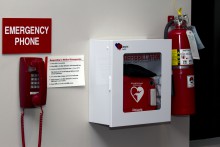
All Virginia schools will soon be required to have defibrillators
$400,000 in funding to assist school purchases of AEDs remains tied up in budget negotiations. Under a law recently passed by the General Assembly, Virginia will require public schools to acquire and maintain automated external defibrillators, or AEDs, a medical device commonly used to help a heart return to a normal rhythm in an emergency. It’… Read More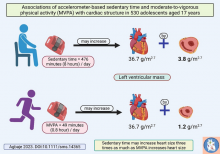
Sedentary time may significantly enlarge adolescents’ heart
In adolescents, sedentary time may increase heart size three times more than moderate-to-vigorous physical activity, a paper published in the Scandinavian Journal of Medicine & Science in Sports concludes. The study was conducted in collaboration between the University of Bristol in the UK, the University of Exeter in the UK, and the… Read More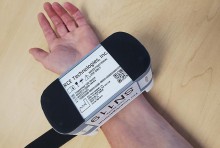
Study aims to find blocked vessels in cardiac-arrest patients
Emergency physicians and cardiologists at Harborview Medical Center in Seattle are studying whether a wristband sensor can quickly, reliably detect a heart-vessel blockage in people who arrive after experiencing an out-of-hospital cardiac arrest. Cardiac arrest involves an electrical malfunction that causes an irregular heartbeat, after which the… Read More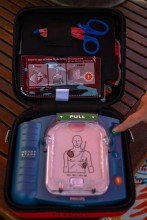
The New York Times reports on AEDs in the home
In an article published today, The New York Times reports on placement of automated external defibrillators (AEDs) in the home, noting that they can save the lives of sudden cardiac arrest (SCA) victims, but the use of personal AEDs is rare. Reporter Gina Kolata highlights cases of resuscitation attempts by individuals using personal AEDs in home… Read More
Is artificial intelligence better at assessing heart health?
Published in Nature, new research from the Smidt Heart Institute shows whether artificial intelligence or sonographers provide most accurate heart evaluations Who can assess and diagnose cardiac function best after reading an echocardiogram: artificial intelligence (AI) or a sonographer? According to Cedars-Sinai investigators and their… Read More
Communication may guide family members’ decisions after sudden cardiac death
Type and timing of communication affects families’ genetic screening rates, finds new study in Circulation: Cardiovascular Quality and Outcomes journal Surviving family members of a person who died from sudden cardiac death rely on information from death investigators and health care professionals to process their relative’s death and understand… Read More
Families need good communication following a sudden cardiac death
When a person dies suddenly from cardiac arrest – especially if they are young – family members often struggle to understand what happened. How well death investigators and health care professionals communicate with family members about the causes of sudden cardiac deaths may influence their decision to seek screening for inherited heart… Read More
A video-based decision support tool may aid decision-making for Black individuals considering ICD implantation
A randomized clinical trial of Black patients eligible for an implantable cardioverter-defibrillator (ICD) found that the use of a video-based decision support tool increased knowledge of, but not assent to ICD implantation. The findings are published in Annals of Internal Medicine. Current clinical guidelines recommend that patients with… Read More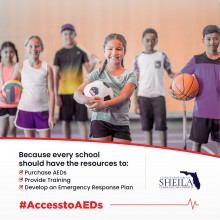
Reps. Cherfilus-McCormick, Posey, Sen. Booker introduce legislation to increase students’ access to AEDs
WASHINGTON, D.C. -- Today, Reps. Sheila Cherfilus-McCormick (D-FL) and Bill Posey (R-FL) will introduce the Access to AEDs Act to promote students' access to automated external defibrillators (AEDs) in schools. “Ensuring that the right tools and training are in place can save a life. The nation watched this unfold with Damar Hamlin of the Buffalo… Read More