The Sudden Cardiac Arrest Foundation is dedicated to bringing you the latest news and developments in sudden cardiac arrest prevention and treatment.

Drug discovered by SFU researchers shows potential life-saving results in treating cardiac arrhythmias
Scientists at Simon Fraser University (SFU) and the Lankenau Institute for Medical Research (LIMR) near Philadelphia have found that a drug discovered at SFU and patented several years ago may have potential lifesaving results in the treatment of conditions leading to sudden cardiac death. The drug, known as AR-787, was originally discovered and… Read More
Third Nationwide CPR-AED Awareness Rally & March scheduled for June 2-3 in Washington, D.C.
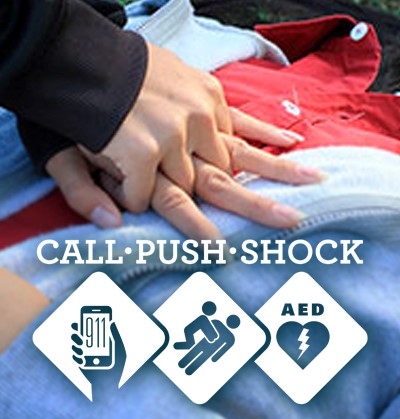
Join heart advocates from around the United States in the movement to help spread awareness about sudden cardiac arrest and how to save lives with CPR and AEDs (automated external defibrillators) in recognition of National CPR-AED Awareness Week June 1-7. The Third Nationwide CPR-AED Awareness Rally & March, led by cardiac arrest survivor Ed… Read More
Evidence of conscious-like activity in the dying brain
A small study finds intriguing brain wave patterns in comatose patients who died following cardiac arrest Reports of near-death experiences--with tales of white light, visits from departed loved ones, hearing voices, among other attributes—capture our imagination and are deeply engrained in our cultural landscape. The fact that these reports… Read More
Survival from cardiac arrest less likely in Asian American Pacific Islander communities
DALLAS, TX -- Science tells us that when a cardiac arrest happens, bystander CPR can double or even triple the chances of survival.[1] Asian American and Pacific Islander (AAPI) adults who experience cardiac arrest outside of a hospital setting have a substantially lower chance of receiving bystander CPR.[2] During Asian American Pacific Islander… Read More
AI can help predict if, when a person will suffer from cardiac arrest
Researchers are using artificial intelligence to help predict if and when a patient could suffer from cardiac arrest. Artificial intelligence can predict if, and when, a person could die of cardiac arrest. "What we set to do is to use imaging ... so we can predict risk of sudden cardiac death," said Dr. Natalia Trayanova, a professor of… Read More
No association between out-of-hospital cardiac arrest and COVID-19 vaccination
Victorian cardiovascular disease (CVD) experts have found no association between out-of-hospital cardiac arrests and COVID-19 vaccinations. The study, published this week in Circulation, is one of the larger of its kind thanks to a unique registry set up in Victoria in 2019 to examine out-of-hospital cardiac arrests. Potential cardiac… Read More
Severe COVID-19 linked with 16-fold risk of life-threatening heart rhythm within 6 months
BARCELONA, SPAIN -- Patients with severe COVID-19 requiring mechanical ventilation are 16 times more likely to develop ventricular tachycardia within six months compared to their peers without severe infection, according to research presented at EHRA 2023, a scientific congress of the European Society of Cardiology (ESC). Risks of other heart… Read More
What is commotio cordis, which NFL player Damar Hamlin says stopped his heart?
Damar Hamlin has confirmed the cause of his near-fatal collapse on "Monday Night Football" as commotio cordis, a rare event caused by a blow to the chest. "This event was life-changing, but it's not the end of my story," Hamlin said Tuesday. Hamlin, 25, a safety for the Buffalo Bills, spoke at a news conference after working out with the team.… Read More
Are high power electric vehicle chargers safe for patients with cardiac devices?
BARCELONA, SPAIN -- High power electric vehicle chargers are safe for patients with pacemakers and defibrillators, according to a study published today in EP Europace, a journal of the European Society of Cardiology (ESC) and presented at EHRA 2023, a scientific congress of the ESC. “The new high power charging stations for electric cars have the… Read More