
National Athletic Trainers Association Calls for Heart Screenings, CPR-AED Training, and Ready Access to AEDs
LAS VEGAS--At NATA’s 64th Annual Meeting & Clinical Symposia in Las Vegas today, leading health care professionals pre-released inter-association task force recommendations titled, “Preventing Sudden Death in Secondary School Athletics Programs: Best Practices Recommendations.” The statement is believed to be the first ever scientific/medical document that focuses on the serious conditions that can affect the high school athlete and will be formally published in the July 2013 issue of the Journal of Athletic Training, NATA’s scientific publication. A copy of the complete statement is available at http://www.nata.org/sites/default/files/preventing-sudden-death.pdf.
The task force’s recommendations are designed to provide secondary school administrators, physicians, athletic trainers, coaches, athletes and others with best practices for preventing sudden deaths, establishment of emergency action plans and providing appropriate medical care. The secondary school athletic population, comprising more than 7 million athletes, leads the nation in athletic deaths with cardiac conditions, heat stroke and head injuries being the three leading causes of death. Each of these causes, as well as exertional sickling, is specifically addressed in the statement.
“Most deaths are preventable through proper recognition and emergency protocols,” said Task Force Chair Douglas J. Casa, PhD, ATC, FNATA, FACSM, director of athletic training, University of Connecticut Neag School of Education; and chief operating officer, Korey Stringer Institute.
“These best practice recommendations serve as a roadmap for policy consideration regarding the safety of secondary school athletes. We have addressed today the leading causes of sudden death in this age group. With continued education, research and advocacy, we can continue to reduce the number of fatalities and keep young athletes safe while playing the sports they love.”
The health and safety of student athletes is of paramount concern to health care professionals, organizations, administrators, coaches, athletes and others. Yet there is no national organization at the secondary school level authorized to make policies and provide universal guidelines. The life-saving health policies are implemented state by state by coaches and athletic administrators, and depending on the state, with varying input and influence of sports medicine professionals.
To prevent and reduce injuries and death, the task force developed the following guidelines for schools:
- Create an emergency action plan in collaboration with coaches, athletic trainers, other medical professionals and campus safety officials and coordinate with the local emergency medical service (EMS) system. It should be site-specific, reviewed each season and updated as necessary.
- Have athletic trainers on staff: the document reiterates the critical role athletic trainers play in preventing sudden death in sport such as prevention, diagnosis, emergency care and treatment.
- Ensure that athletes acclimatize progressively to training demands and environmental conditions for optimal safety. Conditioning should be phased in gradually: the first seven to 10 days of any new cycle should be considered transitional. Exercise and conditioning should not be used as punishment.
With regard to sudden cardiac arrest, the task force recommended the following:
- Athletes should undergo cardiovascular screenings before participation in competitive activities.
- An automated external defibrillator (AED) should be on-site and readily available within three minutes (with one minute being ideal) for all organized sports activities.
- School staff, medical professionals, coaches and athletes should be educated annually about location and use of AEDs.
- Any athlete who has collapsed and is unresponsive should be assumed to be in SCA until proven otherwise.
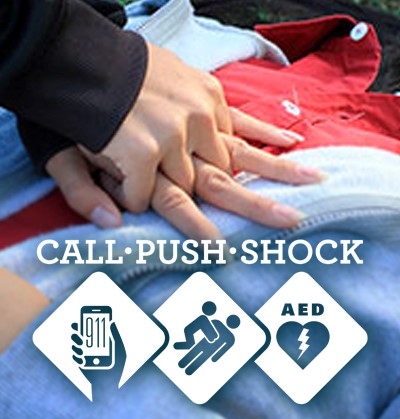
- Proper management includes: prompt recognition of SCA (brief seizure-like activity occurs in 50 percent of young athletes with SCA and should not be mistaken for a seizure); early activation of the EMS system (call 9-1-1); early CPR beginning with chest compressions; early use of an AED; and transport of the patient with SCA to a hospital capable of advanced cardiac care.
The press conference, held at the Mandalay Bay South Convention Center, featured some of the country’s leading youth sports safety medical experts and athletic administrators. Participants included NATA president Jim Thornton, MA, ATC, CES, who opened the program and Casa who provided an overview of the consensus statement, and Jonathan Drezner, MD, professor in the Department of Family Medicine at the University of Washington (Seattle), team physician for the Seattle Seahawks (NFL) and the University of Washington Huskies, and immediate past president of the American Medical Society for Sports Medicine, who spoke about sudden cardiac arrest.
SOURCE: NATA