

H .R. “Butch” Gibbs – Humeston, IA – 55 at the time of the event (April 2, 2004)
Butch Gibbs can tell you that, with a little effort, big things can be done in small town America.
 In 2003 Butch and his wife Susie, a registered nurse, applied for a grant from a federal agency that helps small, rural towns get necessary emergency medical equipment. As a result, their town of Humeston, Iowa—population 543—got a new automated external defibrillator (AED) to replace the community’s 15-year-old, outdated model. That was important since, according to Butch, “(Humeston) doesn’t have an ambulance…they are based at the hospitals in the county seats.” The nearest of those hospitals is a 20-minute drive from Humeston, so the town counts on their first response unit over which Butch and Susie preside.
Two months after the town received the life-saving device, both Gibbs’ were involved in a “save” of a cardiac arrest victim. Eight months after that, on April 2, 2004, Butch found himself on the other end of the little machine designed to shock a faulty heart back into rhythm.
Butch was acting in a community theater production when, near the end of a performance, he felt pain in his chest. But the show went on and so did Butch, still suffering chest pain after talking with some post-show guests at the theater. After driving the six blocks back to their home, Butch told Susie about his discomfort and, after getting a blood pressure reading of 70 over 40, she decided he needed to be in the hospital.
But soon after she called the ambulance to start the 22-mile journey to the Gibbs home, everything went black for Butch. “I stiffened up,” he says, relying as most survivors, on the accounts of those around him to tell the story. “My face got beet red and I went down.”
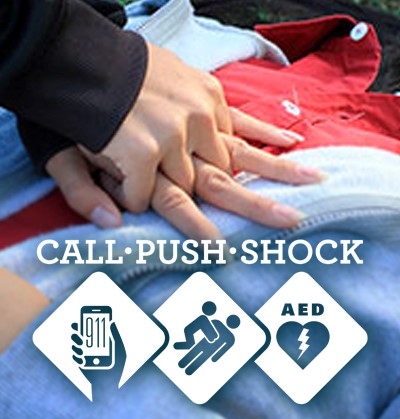
Susie immediately started cardiopulmonary resuscitation (CPR) and daughter Amy called again to make sure the ambulance was on its way. Meanwhile, the first response team was called and administered the first shock with the AED within four minutes.
But Butch was anything but cooperative. His heart refused to keep a steady beat until no less than 22 shocks were administered and he was taken to a hospital in the next county before being air lifted to a larger facility in Des Moines.
“The whole left side of my body felt like I was hit by a truck,” he recalls after regaining consciousness.
Now, along with the local work he has been doing for years, Butch has gone to Washington, D.C. four times over the past two years to address Congress about the importance, in the face of the Bush administration’s proposed cutbacks, of keeping programs that help rural areas get much needed medical equipment.
“Susie and I believe there is a reason I survived,” said Gibbs. “That reason is to help spread awareness of sudden cardiac arrest and to show the importance of AEDS and early defibrillation so that others may have the same chance that I did!”