
 Paul Hamel, 68, was simply trying to support the American Heart Association’s 2001 “Heart Walk” fundraiser in Texas. He had no idea what was about to unfold.
Since he had taken a stress test and had been cleared by his physician two weeks before, he figured it would be okay to run—rather than walk—to the finish line. And so he did.
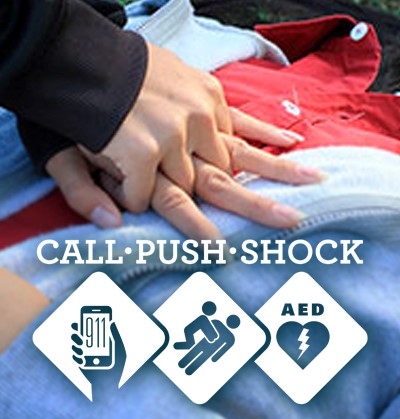
“After I had completed the run,” said Hamel, “I was feeling real good. I stopped and got a cold drink and a banana. As I was about to depart the area, I stopped to talk to someone. This is when I had the sudden cardiac arrest. Luckily for me just across the street was the Killeen Fire Department’s EMS team, equipped with an AED (automated external defibrillator), which saved my life.” It was the first time they had used their newly acquired device on a patient.
“I can tell you this—if it had happened where I was working out earlier that day, I would not be here today.”
When Hamel collapsed, he fell backward down a set of concrete steps. The worst part, he said later, was that he had plenty of bruises. “When I woke up, I was in the hospital. They told me I had had a sudden cardiac arrest. All I know is I was black and blue everywhere.”
Hamel remained in the hospital a few days and received an implantable cardioverter defibrillator (ICD). It was later replaced when the battery was low. “I was in and out the same day,” he said. “It was no big deal.”
Luckily, Hamel was protected the next time SCA struck. It was August 2005 and he was at a wedding in New England. “I was doing the twist and my heart rate was high. Suddenly the ICD went off. But that’s what it’s there for. My life was saved again.”
Today, Hamel, who spent 27 years in the military and 45 years in government service, has no restrictions. He still walks every day and enjoys woodworking. “I would still be running two miles a day on the treadmill and lifting weights four times a week if it were not for my back. It’s not my heart that slows me down, I can tell you that.”
Hamel could not be more grateful to his rescuers and other cardiac care advocates. “I want you all to know the work you have been doing—getting out information about the AED and raising funds for research—means a great deal to survivors like me.”