The Sudden Cardiac Arrest Foundation is dedicated to bringing you the latest news and developments in sudden cardiac arrest prevention and treatment.
Genetic Variant Might Be a Better Marker for Heart Disease
CINCINNATI, OH--Researchers at the University of Cincinnati (UC) College of Medicine have found that a newly identified subset of a known genetic variant found primarily in individuals of South Asian descent may be a better marker for carriers of heart dysfunction in this population and that individuals with this genetic variant are more likely to… Read More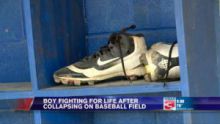
12-Year-Old Collapses at Baseball Practice, Treated with AED
GRAYSON, KY--A 12-year-old boy is being treated in a hospital after suffering a cardiac arrest and collapsing during little league baseball practice. Thanks to a Kentucky law that requires automated external defibrillators (AEDs) to be at sporting activities, he was able to get help much faster. Carter County EMS Director Frank Sloas says the… Read More
Idiopathic? The Importance of Comprehensive Evaluations of Survivors of Cardiac Arrest
Characteristics and clinical assessment of unexplained sudden cardiac arrest in the real-world setting: focus on idiopathic ventricular fibrillation Recent studies have shown that in more than half of apparently unexplained sudden cardiac arrests (SCA), a specific etiology can be unmasked by a careful evaluation. A new study from the Paris Sudden… Read More
Two New Studies Provide Insights on Sudden Infant Death Syndrome
A study just presented at a medical conference in Europe reports that siblings of Sudden Infant Death Syndrome (SIDS) victims have a four-fold higher risk of SIDS. Researchers recommend that autopsies should be carried out on SIDS victims and that family members should undergo cardiology tests. More... In contrast, another study, just published… Read More
New Augmented Reality Hands-Only CPR Makes Training Life-Like and Mobile
American Heart Association develops augmented reality Hands-Only CPR training in collaboration with Google DALLAS, TX--The American Heart Association has collaborated with Google to develop an augmented reality version of Hands-Only CPR training that launches today in the Association’s mobile App, My Cardiac Coach™. The project uses new… Read More
Siblings of SIDs Victims Have Four-Fold Risk of SIDS
Researchers say steps to avoid sibling deaths could be identified through autopsies and family screening BARCELONA, SPAIN--Siblings of cot death victims have a four-fold higher risk of cot death, according to research presented today at EHRA 2018, a European Society of Cardiology congress. The 38-year study in nearly 2.5 million infants… Read More
European Network Explores Gender-Based Prevention and Treatment of Sudden Cardiac Arrest
BARCELONA, SPAIN--Researchers will use a European network of 90,000 patients to explore different approaches to prevention and treatment of sudden cardiac arrest for men and women, they announced today during a workshop on sex and gender differences at EHRA 2018. The European Sudden Cardiac Arrest network (ESCAPE-NET) is backed by the… Read More
Genetic Heart Diseases Rarely Cause SIDS
Findings may help prevent unnecessary genetic testing of surviving family members Genetic heart diseases (GHDs) cause fewer cases of sudden infant death syndrome (SIDS) than previously thought, according to a study published in the March 20 issue of the Journal of the American College of Cardiology. David J. Tester, from the Mayo Clinic in… Read More
A Tale of Two Airlines
A Loss on WestJet Flight crew took 10 minutes to find AED after elderly man initially found in medical distress Questions are being raised about how prepared flight crews are to deal with medical emergencies after an elderly man died on a WestJet flight from Hawaii to Calgary last week. The flight left Honolulu late at night on March 7 and was… Read More