
CONTACT:
Gina Peattie, MPA, Executive Director
Sudden Cardiac Arrest Foundation
gina.peattie [at] sca-aware.org
518.291.9181
February 2, 2026 — Wexford, PA — Many individuals and communities are eager to raise awareness about sudden cardiac arrest (SCA), but the Sudden Cardiac Arrest Foundation’s (SCAF) Voices of the Community (VOC) survey finds that key barriers remain—barriers SCAF is actively working to address through resources, training, and support. The national survey reflects perspectives from SCA survivors, co-survivors, advocates, educators, and medical professionals. Initial findings were presented at the Cardiac Arrest Survival Summit, hosted by the Citizen CPR Foundation in Phoenix, Arizona, in December 2025.
Conducted online in fall 2025, the VOC survey focused on raising awareness of sudden cardiac arrest, community preparedness, training, education, and access to resources. A second survey was conducted to better understand the lived experiences and ongoing support needs of survivors, co-survivors, and lay responders participating in the Cardiac Arrest Survivor Alliance (CASA) program; findings from that survey will be shared separately.
VOC findings show that while SCAF’s programs and tools help people learn and connect, gaps in public understanding, AED access, and outreach remain. By providing targeted resources and guidance, SCAF helps communities move from awareness to effective education and action.
"The Voices of the Community survey shows us where the gaps are—but it also highlights the incredible willingness of individuals and communities to learn and act," said Gina Peattie, MPA, Executive Director of the Sudden Cardiac Arrest Foundation. "At SCAF, we’re committed to providing the resources and guidance people need to raise awareness, educate others, and strengthen every link in the Chain of Survival. With American Heart Month underway, it serves as a timely reminder that awareness must be paired with action, training, and accessible resources to save lives.”
Voices of the Community: Challenges
The VOC survey collected responses from 132 individuals representing a cross-section of the sudden cardiac arrest community, including survivors of sudden cardiac arrest (47%), trainers and educators (30%), advocates (25%), co-survivors (18%), and medical professionals (15%).
When asked about the biggest challenges to advancing SCA awareness and preparedness, respondents identified:
- Public perception (low awareness, misconception of sudden cardiac arrest, limited community engagement) (53%)
- Limited automated external defibrillator (AED) placement (availability/accessibility) (31%)
- Communication and outreach challenges (difficulty reaching target audiences; marketing difficulties) (24%)
- Difficulty partnering with institutions (local schools, workplaces, community centers, etc.) (17%)
- Limited access to CPR/AED training (17%)
80% of respondents reported CPR training (56% certified in CPR/AED and an additional 24% trained in hands-only CPR).
Foundation Impact: Building Knowledge, Connection, and Confidence
Respondents to the Voices of the Community survey reported meaningful impact from their engagement with the Sudden Cardiac Arrest Foundation (SCAF):
- 53% said SCAF increased their knowledge about sudden cardiac arrest
- 45% reported stronger connections to the SCA community
- 40% said SCAF helped them cope with SCA-related experiences
- 34% gained tools and practical resources
- 30% were motivated to participate in events or initiatives
The most frequently requested SCAF programs and resources include online toolkits/guides (53%), opportunities to collaborate and network with others in the SCA space (e.g. SCAF’s H.E.A.R.T. Champion program and Cardiac Arrest Survivor Alliance (CASA) program) (48%), and educational webinars and trainings (43%), highlighting the importance of accessible education and peer connection.
This impact is reflected in the growth of SCAF’s H.E.A.R.T. Champion program (Heroes Empowering Action, Readiness & Training). Since launching in June 2025, the program has grown to more than 240 volunteer champions nationwide, empowering individuals to raise awareness, promote CPR and AED education, and lead preparedness efforts in their local communities. Many H.E.A.R.T. Champions played a key role in SCAF’s inaugural Ready to Respond campaign, launched during Sudden Cardiac Arrest Awareness Month in October 2025. Together, Champions—along with SCAF partners and allies—hosted 97 Ready to Respond events, training 8,891 people in hands-only CPR and AED use.
Clear Opportunities for Growth
When asked where SCAF should focus future efforts, VOC respondents prioritized:
- Expanded media outreach and storytelling
- More tailored, role-specific resources (e.g. schools, workplaces, senior communities, etc.)
- Increased outreach to underrepresented/underserved communities
- Expanding support services for survivors and families (through SCAF’s Cardiac Arrest Survivor Alliance (CASA) program)
What the Community Wants People to Know About Sudden Cardiac Arrest
When asked, “What is the most important thing you want people to know about sudden cardiac arrest?” respondents overwhelmingly emphasized three interconnected themes: sudden cardiac arrest can happen to anyone, time-sensitive bystander action saves lives, and confusion between SCA and heart attack continues to delay critical response.
Many respondents also stressed that early CPR and access to an AED are often the difference between life and death, noting that bystanders are often the first link in the Chain of Survival. Others emphasized the emotional and long-term impact of surviving sudden cardiac arrest, highlighting the need for continued support, connection, and recovery resources for survivors and their families.
Together, these responses reinforce a clear message from the community: awareness must be paired with action, access, and ongoing support.
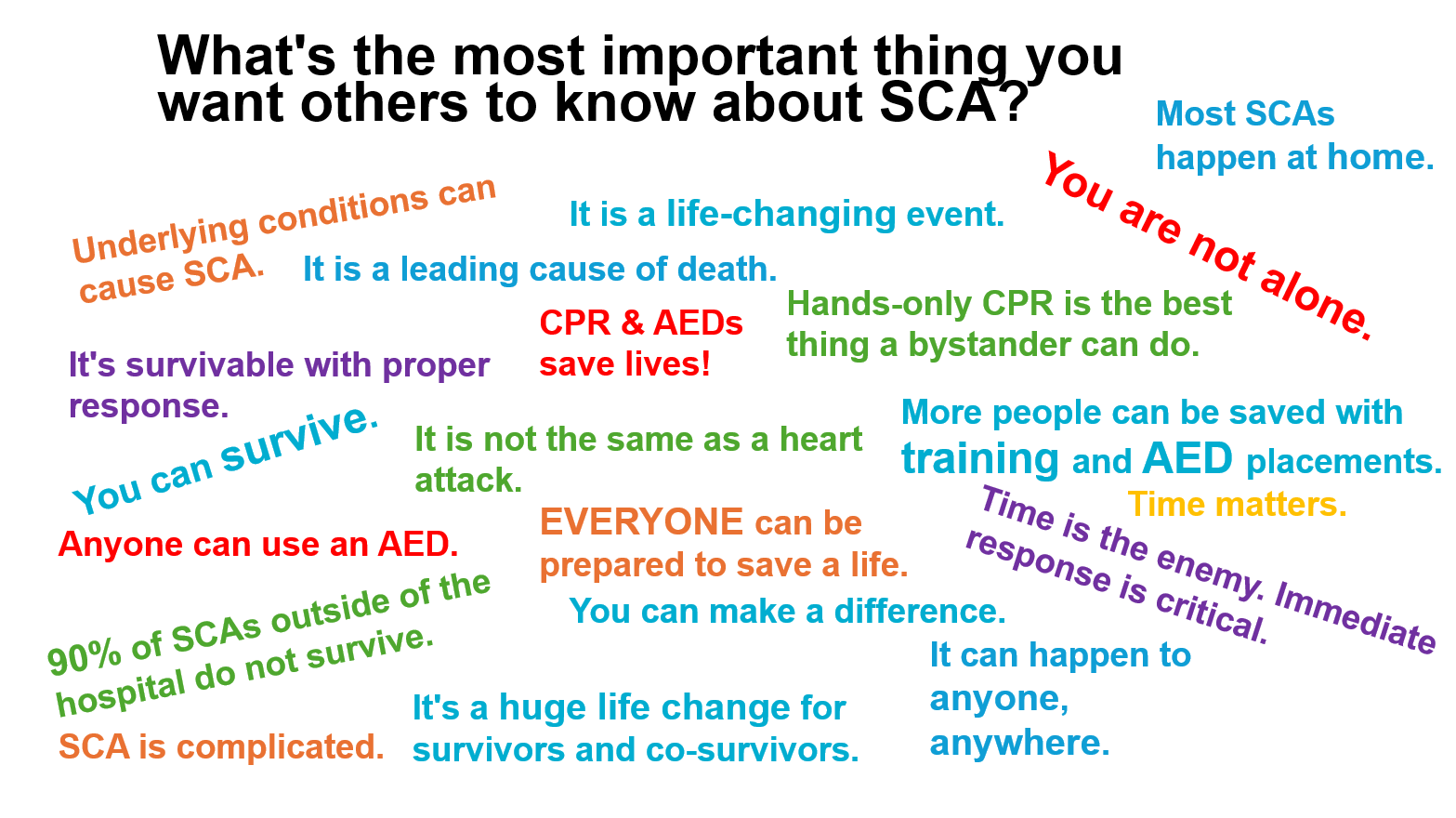
Word cloud representing responses to the Voices of the Community survey question, “What is the most important thing you want people to know about sudden cardiac arrest?”
Future Directions for the Sudden Cardiac Arrest Foundation
SCAF recognizes the importance of incorporating stakeholder feedback into its strategic plans.
“These findings guide our path forward, helping SCAF focus on programs and initiatives that have the greatest impact,” said Dr. Joe Farrell, Board Chair of the Sudden Cardiac Arrest Foundation. “As we plan for the future, our goal is to strengthen awareness, training, and support so every community is prepared when seconds matter most.”
Top priorities for the foundation include:
- Continuing to offer high-impact, accessible resources: Toolkits, social media content, templates, and other materials that are easy to customize and share. SCAF will also continue to host regular webinars on a variety of topics relevant to the SCA ecosystem, including raising awareness and effective advocacy.
- Enhancing support for local partnerships: Providing trainings, templates, sample talking points, and outreach letters for champions to start conversations and build connections in their own communities.
- Leveraging SCAF’s digital presence for robust storytelling: Using its social media and web platforms to increase visibility of SCA information and resources. As a long-standing clearinghouse for all things sudden cardiac arrest, SCAF will continue these efforts into the future.
- Expanding support services for survivors, families, and responders: Through SCAF’s CASA program, the foundation will improve accessibility and reach by translating materials into additional languages, enhancing user experience and navigation, expanding the resource library, and implementing targeted outreach to increase program referrals.
- Providing targeted educational materials: Continuing to develop toolkits and other educational resources—digital and print—designed for specific audiences.
About the Voices of the Community Survey
The Voices of the Community survey was conducted online in late 2025 among 132 members of the sudden cardiac arrest community and Sudden Cardiac Arrest Foundation constituency. All responses were collected via a web-based survey link that was promoted on SCAF communications channels. The survey represents the first arm of a two-part initiative designed to inform SCAF’s future programs, outreach, and educational resources.