

 CORVALLIS, OR--Tom Fregoso's eyes bore in on his HP laptop. As he watched video clips and read articles, the Oregon State men's basketball trainer confronted the painful images he can never forget.
It was about 9 a.m. Wednesday. Soon enough, he would stretch out players, tape ankles, massage calves -- whatever needed tending before the Civil War that night.
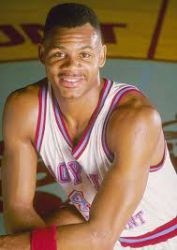
But in those quiet moments alone in the OSU practice facility, Fregoso revisited the details of the March 4, 1990, tragedy at Gersten Pavilion: The crowd's piercing silence when Hank Gathers collapsed near midcourt. The four or five minutes Fregoso performed CPR. The sinking feeling he had seeing the Loyola Marymount star loaded onto an ambulance.
In that moment, Fregoso now says he had suspected what doctors would soon confirm: Gathers, the Herculean leader of Paul Westhead's "System," was dead. He was 23.
Fregoso wiped away tears Wednesday morning as he scrolled through stories honoring the 25th anniversary of a life taken far too early. Then he thought about Chai Baker, the Beavers freshman guard he helped save from a similar fate in August.
Good is coming out of all this, Fregoso told himself...
Loss of a legend
In early March 1990, Fregoso flew to Los Angeles with the University of Portland men's basketball team. The 32-year-old was in his sixth year as the Pilots' head athletic trainer, and work offered a release from the frets of a soon-to-be parent. It was less than a week before the birth of his first child, an adopted son named Matthew.
Portland topped Santa Clara in their first-round West Coast Conference tournament game, setting up a semifinal matchup with vaunted Loyola Marymount. The 23-5 Lions had captured national attention with their high-octane offense. LMU, which averaged an NCAA-record 122.4 points per game that season, ratcheted up the tempo, shot at will and pressed constantly.
Gathers, in tandem with fellow Philadelphia native Bo Kimble, was the centerpiece. The 6-foot-7, 210-pound senior seldom shot from beyond 10 feet, instead feasting on acrobatic dunks and put-backs. Analysts touted him as a potential national player of the year. He was a likely NBA lottery pick.
Fregoso had tracked Gathers' medical concerns from afar. Three months earlier, the chiseled forward had collapsed during a win over UC Santa Barbara. Doctors later cleared him to compete after prescribing a medicine called Inderal, which was intended to address his irregular heartbeat.
LMU trainer Chip Schaefer, a former classmate of Fregoso's at the University of Utah, called from time to time for Fregoso's perspective on his relatively foreign predicament. Research on athletes with heart conditions was nascent. Fregoso said he saw a defibrillator courtside for the first time when Portland visited LMU earlier that season.
But Gathers' health was hardly on Fregoso's mind as the underdog Pilots prepared for their semifinal against the Lions. In the hours before tipoff, Fregoso tried to ready himself for what he was convinced would be a shellacking.
Reality aligned with expectations. LMU blitzed Portland, building an early double-digit lead. With less than 14 minutes left in the first half, Fregoso could only shake his head on the Pilots bench when guard Terrell Lowery found Gathers for a monstrous alley-oop.
"Unbelievable," Fregoso muttered under his breath.
Suddenly, Gathers crumpled to the court. The crowd gasped. Fregoso could sense something was gravely wrong. He raced off the bench. When he arrived, Schaefer was kneeling next to Gathers. He tried to get up, but slumped back to the floor and began to convulse.
Fregoso steadied Gathers' head and checked his neck for a pulse. It was present. As Gathers' family watched at midcourt, medical staffers placed him on a stretcher. Fregoso followed closely as they wheeled him outside the gym door, to a patio area.
Fregoso, Schaefer, team physician Dr. Dan Hyslop and two paramedics worked on Gathers. After they hooked him up to a defibrillator, Fregoso heard someone say they had lost the pulse, so he began CPR. When paramedics intubated Gathers, Fregoso focused on chest compressions.
At 5:21 p.m., seven minutes after the collapse, Rescue Ambulance 5 of the Los Angeles Fire Department arrived. Medics hauled Gathers into the vehicle and sped toward Daniel Freeman Marina Hospital, 2 miles away.
No one spoke to Fregoso as the flashing red lights disappeared out of view.
"But I knew," he said recently. "It just seemed like he never came to."
Drenched in sweat, Fregoso trudged back to the visiting locker room, where Portland players were sobbing into one another's shoulders. For nearly three hours, Fregoso sat there while league officials debated whether to continue the tournament.
Doubts ran through his mind. Had he done everything he could? How did it get to this point? Fregoso had long ago spurned copper mining, the family trade in his hometown of Kearns, Utah, for the chance to rescue people. Until that point, not saving a person in need hadn't seemed possible.
Gathers was pronounced dead a little more than an hour after he left Fregoso's sight. The WCC canceled the rest of the tournament and made LMU, the No. 1 seed, its NCAA Tournament representative...
Redemption
It didn't take Chai Baker long to recognize how much long time athletic trainer Fregoso cares. When Baker arrived on campus in July, he appreciated that the man with the silver Fu Manchu mustache asked about more than basketball. Fregoso hoped Baker, more than 2,800 miles away from his North Florida home, was adjusting well to his new surroundings.
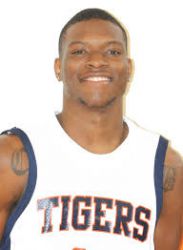 At 11 a.m. Aug. 19, Baker was rejoining the layup line during an informal team workout at OSU's practice facility when he felt short of breath. He gasped for air once, and again, before hitting the floor.
A student manager alerted Fregoso. Within a minute of Baker's collapse, he was administering CPR. Fregoso noticed that Baker looked as Hank Gathers had on that tragic afternoon in Gersten Pavilion: the blank stare, the pale complexion.
He used an automated external defibrillator on Baker and administered a shock. At one point, the 19-year-old's heart stopped beating for about two minutes.
Fregoso kept working through his chest compressions. He kept checking the defibrillator to see whether he needed to give another shock. He kept praying that all would be all right this time. At 11:07 a.m., EMTs arrived and strapped Baker onto a gurney before darting for the ambulance.
"I can't even put into words how much Tom means to me," Baker said, glancing across Ralph Miller Court at him before a recent Beavers game. "He was there in my time of need. If it wasn't for him, I wouldn't be here today."
Baker was three days into his eight-day stay at Good Samaritan Medical Center when he learned he had hypertrophic cardiomyopathy. Fregoso, who made daily bedside visits, helped Baker understand HCM. He had researched the condition extensively after Gathers' death.
High-level basketball now appears unlikely for Baker, whose heart is significantly enlarged. He remains involved with the program and plans to earn his degree from OSU.
But Fregoso recognizes that grieving a shattered dream continues long after the headlines stop. When Baker takes a day or two off from practice, Fregoso shoots him a quick text: "I need to see you."
For him, Baker is a living embodiment of Gathers' legacy. In the wake of the tragedy at Gersten Pavilion, the NCAA began requiring defibrillators at all schools. It also mandated that all student-athletes submit to an extensive battery of heart-related tests. If not for the LMU star's death, Fregoso believes, Baker's story could have ended similarly.
About an hour before Wednesday's Civil War against Oregon started, Baker hugged Fregoso near the Beavers bench. It has become their customary greeting.
But on that day, the 25th anniversary of Gathers' death, Fregoso began to cry tears of joy.
Watch Hank Gathers' final moments.
SOURCE: Connor Letourneau, The Oregonian