CHANTILLY, VA--The International Association of Fire Chiefs (IAFC) supports the use of mobile technology for citizen response in conjunction with community cardiopulmonary resuscitation (CPR) and automated external defibrillator (AED) programs. In a position statement adopted May 9, the IAFC Board of Directors cited the PulsePoint mobile phone application (app) as a unique solution to increase survival from sudden cardiac arrest by bridging the gap between a cardiac arrest event and arrival of medical assistance.
According to the position statement, “Applications such as PulsePoint offer a unique way to involve the citizens in a local jurisdiction to not only become aware of when others need life or death assistance, but also provide them an avenue to render aid. This not only reflects well on the fire department but provides the community with a sense of ownership in the program.”
"Sudden cardiac arrest is not only a concern for emergency responders, but a community-wide challenge that requires a community-wide response," said Fire Chief Thomas Jenkins, IAFC president and chairman of the board. “As I’ve experienced in my own city, PulsePoint not only involves our residents in critical time-sensitive medical emergencies, but also strengthens bonds in our community and creates opportunity for positive interaction with our emergency responders.”
When implementing a technology-based program to activate citizen response, the IAFC Position Statement recommends that fire departments consider the following four issues:
- Activating citizen responders with PulsePoint
- Adopting the professional version of the app, Verified Responder, to engage in private residence activations
- Utilizing PulsePoint AED to build a comprehensive AED registry
- Positioning PulsePoint as a way to provide transparent, real-time communication with citizens that increases familiarity with the app and connectivity with their emergency responders.
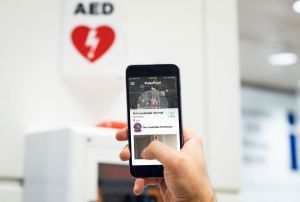
PulsePoint is a free app for citizens that matches victims in cardiac arrest with nearby CPR-trained individuals. Along with the location of the victim, the app also provides the location of the nearest AED. PulsePoint notifications are driven by the local jurisdiction’s computer-aided dispatch (CAD) system, the same system used to dispatch emergency responders. If a 9-1-1 call from a public location leads a dispatcher to believe that a cardiac arrest event has occurred, both emergency responders and citizen responders are notified simultaneously.
“By directly alerting those who are qualified and nearby, maybe in the business next door or on the floor above, PulsePoint is uniquely positioned to put the right people in the right place at the right time,” said Richard Price, president of the PulsePoint Foundation. “With more than 3,000 cities now connected to PulsePoint and with well over one million app users, support and guidance from the IAFC is truly valued by our organization.”
Each year, approximately 350,000 sudden cardiac arrests occur outside a hospital setting in the United States. Nearly 90 percent of these patients die. With each passing minute without cardiopulmonary resuscitation (CPR), the chance of survival decreases by seven to ten percent.
Participation by the general public prior to arrival of fire and emergency services is essential to increasing the patient’s chance of survival.
SOURCE: PulsePoint Foundation