The Sudden Cardiac Arrest Foundation is dedicated to bringing you the latest news and developments in sudden cardiac arrest prevention and treatment.
Hands-Only CPR Training Kiosks Can Increase Bystander Intervention, Improve Survival, Study Shows
WASHINGTON, DC--Prompt action from a bystander can impact the likelihood a person survives cardiac arrest when it occurs outside of a hospital. Hands-Only Cardiopulmonary Resuscitation (CPR) training kiosks are becoming more widespread and are an effective training tool, a new Annals of Emergency Medicine analysis finds. A new study of 738… Read More
Racial Disparities in Sudden Cardiac Death Rates Cannot Be Explained by Known Risk Factors
Despite controlling for factors including income, smoking and cholesterol levels, black patients remain at high risk PHILADELPHIA, PA--While it’s well reported that black patients are twice as likely as white patients to succumb to sudden cardiac death (SCD), the underlying factors that propel this disparity remain unknown. According to a first-… Read More
Clifton Callaway Receives 2018 AHA Lifetime Achievement Award
CHICAGO, IL--The American Heart Association awarded Clifton W. Callaway, MD, PhD, the 2018 Lifetime Achievement Award in Cardiac Resuscitation Science at its Resuscitation Science Symposium 2018. The award recognizes leaders in the field of cardiac resuscitation science. Callaway, Professor of Emergency Medicine at the University of Pittsburgh… Read More
Key Takeaways from Three Landmark Heart Studies
Pivotal research conducted at cedars-sinai announced at american heart association scientific sessions CHICAGO, IL--Today, at the American Heart Association Scientific Sessions, the research group led by Sumeet Chugh, MD, professor of Medicine and associate director of the Smidt Heart Institute, presented three critical research studies aimed at… Read More
Some Heart Patients Ride Roller Coasters and Pursue Other Thrill-seeking Activities Despite Warnings
DALLAS, TX--Adults with an inherited thickening of the heart muscle, often don’t stop participating in thrill-seeking activities despite recommendations that they should. And while some experienced minor consequences, only a few suffered serious health effects as a result, according to preliminary research from an online survey to be presented in… Read More
Black Infants May Have Higher Cardiac Arrest Rates
DALLAS, TX--A multi-year review of all pediatric emergency response records in Houston found that Black infants comprised a significantly larger proportion of cardiac arrests than expected, more than four times more cases than in non-Hispanic White children, according to preliminary research to be presented in Chicago at the American Heart… Read More
PTSD Linked to Increased Complications and Death a Year After Cardiac Arrest
DALLAS, TX--Post-traumatic stress disorder (PTSD) symptoms may significantly increase cardiac arrest survivors’ risk of major cardiovascular events and death up to a year after the initial medical crisis, according to preliminary research to be presented in Chicago at the American Heart Association’s Resuscitation Science Symposium 2018 - an… Read More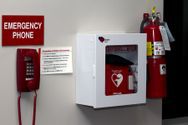
Public AEDs Cost-Effective for Saving Lives, Improving Cardiac Arrest Outcomes
DALLAS, TX--Automated external defibrillators (AEDs) accessible in public places are cost-effective health tools for saving lives and improving cardiac arrest survival, according to two separate research studies to be presented in Chicago at the American Heart Association’s Resuscitation Science Symposium 2018, an international conference… Read More
Two Novel Studies Explore Why Women Receive Less CPR from Bystanders
DALLAS, TX--Concerns about inappropriate contact or causing injury may help explain why bystanders are less likely to perform CPR on women – even “virtual” women – than on men who collapse with cardiac arrest, according to two studies presented at the American Heart Association’s Resuscitation Science Symposium 2018, an international conference… Read More