The Sudden Cardiac Arrest Foundation is dedicated to bringing you the latest news and developments in sudden cardiac arrest prevention and treatment.
Multiple Organizations Unite for National CPR-AED Awareness Week, June 1-7, Urging the Public to 'Call-Push-Shock'
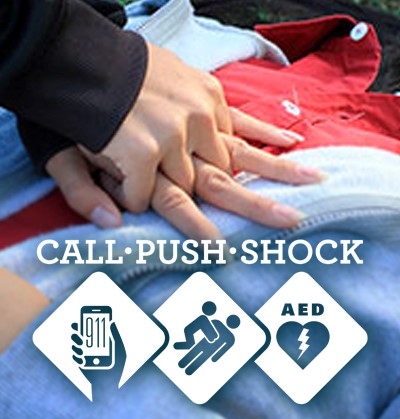
In recognition of National CPR-AED Awareness Week, June 1-7, Parent Heart Watch and the Sudden Cardiac Arrest Foundation, along with multiple partners, are urging the public to learn hands-only CPR and how to use an automated external defibrillator. Their campaign, Call-Push-Shock, is a growing national movement that aims to curb the public health… Read More
Energy Drinks May Increase Risk of Heart Function Abnormalities and Blood Pressure Changes
Study Highlights: Three to four hours after drinking 32 ounces of energy drinks, the heart’s electrical activity was abnormal compared to drinking a placebo drink. Two different commercially available energy drinks produced the same results, suggesting that energy drinks as a class should be consumed with caution. DALLAS, TX--Drinking 32… Read More
What Is Known – And Not Known – About Heart Muscle Diseases in Children
Statement Highlight: Cardiomyopathies (heart muscle diseases) in children are the focus of a new scientific statement from the American Heart Association that provides insight into the diagnosis and treatment of the diseases as well as identifying future research priorities. It will be published in the American Heart Association’s journal… Read More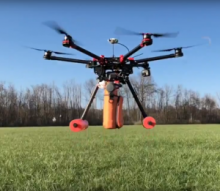
Notre Dame Students Create Drone Defibrillator for Fast Response to Cardiac Arrest Victims
Students at the University of Notre Dame are thinking of a new way to save lives. The students, Nathaniel Hanson and Zachary Kousens, Class of 2019, came up with a drone defibrillator. “The idea is when someone has sudden cardiac arrest and a bystander calls 911 and an EMT responds, help typically takes 10 minutes to get to the scene,” Hanson… Read More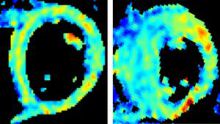
Researchers Spot Tell-Tale Signs of Potentially Fatal Cardiac Arrest in Hypertrophic Cardiomyopathy
Hypertrophic cardiomyopathy is the leading cause of sudden cardiac death in young people (such as the unexpected near fatal cardiac arrest suffered by the-then 23 year old footballer Fabrice Muamba), but the microscopic heart muscle abnormalities behind these tragic events can only be picked up in a post-mortem. Now, in a study published in the… Read More
Resuscitation Quality Improvement Programs Offer a Comprehensive Solution to Help Improve Out-of-Hospital Cardiac Arrest Outcomes in Communities
The American Heart Association, Laerdal Medical and the Resuscitation Academy Foundation introduce programs for prehospital and public safety responders to help increase out-of-hospital cardiac arrest survival. A suite of resuscitation quality improvement programs for pre-hospital and public safety responders is now available from RQI Partners… Read More
Home-Based Cardiac Rehabilitation Is An Option to Overcome Barriers of Traditional Cardiac Rehabilitation
DALLAS, TX--Home based, medically supervised cardiac rehabilitation may be, for some patients, an alternative to traditional medical center cardiac rehabilitation programs after a heart attack or other heart procedure, according to a joint scientific statement from the American Heart Association, American College of Cardiology and the American… Read More
The Latest in Resuscitation Science Research: Highlights From the 2018 American Heart Association Resuscitation Science Symposium
The 2018 American Heart Association (AHA)’s Resuscitation Science Symposium (ReSS), held November 9 to 11, in Chicago, Illinois, brought together thought-provoking research from basic science to clinical trials and frontline work in the public health space. Across 16 sessions, more than 50 oral presentations were given on topics ranging from a… Read More
Body Scanners at Airport Security Do Not Interfere with Functionality of Pacemakers and Defibrillators
First of its kind study presented at Heart Rhythm 2019 shows travelers with common cardiac devices can pass through without restrictions or precautions. SAN FRANCISCO, CA--Results from new research show that passengers with cardiac implantable electronic devices (CIEDs), such as pacemakers or defibrillators, can safely travel through airport… Read More